The Action Plan for the Development of Organic Production adopted in March 2021 takes the approach that, in order to stimulate organic production, consumer demand for organic products should grow. This requires, amongst other things, increased public awareness of the characteristics and benefits of organic production.
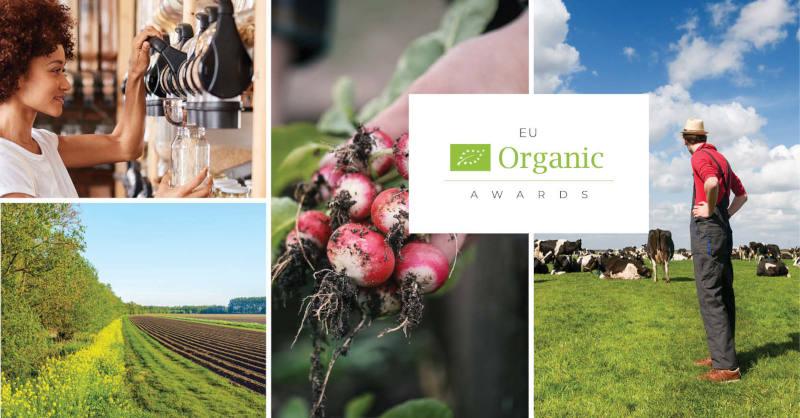
For this purpose, the Action Plan includes the launch of annual awards recognising excellence in the organic value chain.
These awards will be handed over for the third time on 23 September 2024, which is EU Organic Day.
Categories and awards
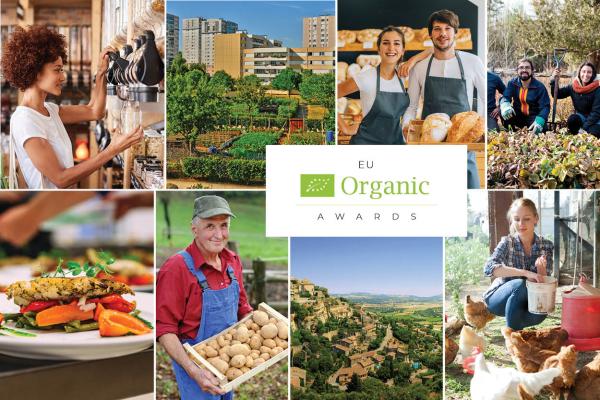
The EU organic awards comprise 8 awards across 7 different categories. They acknowledge different actors along the organic value chain that have developed an excellent, innovative, sustainable, and inspiring project producing real added value for organic production and consumption.
The inaugural EU organic awards took place in 2022. Be inspired by previous winners.
Applications for the third edition closed on 12 May 2024 23:59:59 CEST.
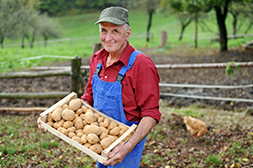
 Category 1: Best organic farmer (female) and Best organic farmer (male)
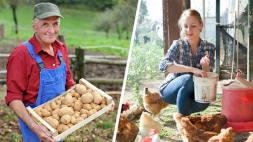
The objective of this award is to reward a farmer (one female and one male). This award is organised by COPA-COGECA and IFOAM Organics Europe.
 Category 2: Best organic region
The objective of this award is to reward a region. This award is organised by the European Committee of the Regions.
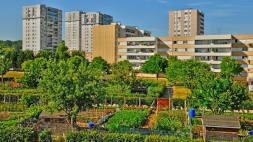 Category 3: Best organic city
The objective of this award is to reward a city. This award is organised by European Committee of the Regions.
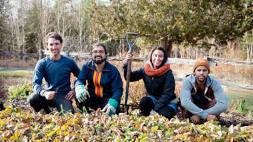 Category 4: Best organic bio-district
The objective of this award is to reward a “bio-district”. This award is organised by the European Committee of the Regions.
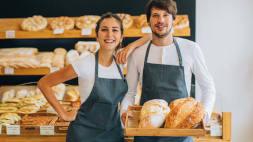 Category 5: Best organic food processing SME
The objective of this award is to reward a Small and Medium-sized Enterprise (SME) processing organic products. This award is organised by the European Economic and Social Committee.
 Category 6: Best organic food retailer
The objective of this award is to reward an SME food retailer selling organic products. This award is organised by the European Economic and Social Committee.
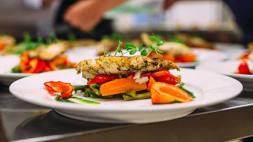 Category 7: Best organic restaurant/food service
The objective of this award is to reward an SME restaurant/food service restaurant (standalone or part of a hotel) and/or food service (caterer or canteen) proposing organic certified references in their menu. This award is organised by the European Economic and Social Committee.
Applications
Reasons to apply
Do you want to contribute to the greater public awareness of organic production in the EU? Do you want to contribute to the greater affordability and/or accessibility of organic products in the EU? Have you developed and implemented, or are you still implementing, an excellent, innovative, sustainable and replicable project for this purpose? Would you like to increase public awareness of the project?
If the answer to any of the above questions is 'yes', you should consider entering for the next edition of the EU organic awards. If you win, you will receive a non-financial recognition award and greater public visibility for your project. So whether you are:
- an organic farmer
- a city or region serving organic meals to patients or pupils or otherwise promoting organic production
- a business in the organic food chain with a unique approach
- you should think about entering the EU organic awards.
Application process
Applicants for the 2024 EU organic awards were asked to:
- read the different sections of this website, in particular the eligibility criteria and the selection criteria;
- choose the award category they wished to enter;
- apply online from 4 March until 12 May 2024;
- provide answers to closed guiding questions (some relating to the four principles of organic and the sustainability pillars), to help the jury to obtain more information about the applicants.
Any actor or institution along the organic value chain with a noteworthy project contributing to the greater affordability and/or accessibility of organic products in the EU can apply. Project promoters must be established or residents in the EU. Applications must be submitted in one of the official EU languages and the projects EU based.
Applications for the EU Organic Awards had to meet the following eligibility criteria:
a) The starting point to apply for one of the awards was the EU organic awards webpage, which linked to the online application forms for each of the awards during the required period. Applications had to be submitted by 12 May 2024, 23:59:59 CEST at the latest.
Only complete applications (all sections filled in) submitted via the online platform by the deadline will be considered once the application period closes.
b) Applications had to be in one of the official EU languages.
c) Applicants had to be legal or natural persons established or resident in one of the 27 Member States of the EU.
d) The project submitted had to be EU based and refer clearly to one of the 7 award categories/8 awards. The same project could not be submitted for several award categories/awards. Each applicant could only apply for one single award. The maximum number of applications per award is one.
e) The winners of the previous editions could not re-apply for the 2024 edition. The non-winning finalists of the previous editions could re-apply for the 2024 edition.
f) The project was required to either have been fully implemented already or be in a sufficiently mature state so as to enable the jury to assess it (i.e. physical implementation had to be advanced enough to demonstrate the achievement of the objectives).
g) Specific eligibility criteria for each award category:
- Best organic farmer (female) and Best organic farmer (male): Certified accordingly to the Regulation (EU) 2018/848 of 30 May 2018 on organic production and labelling of organic products and repealing Council Regulation (EC) No 834/2007;
- Best organic region: No specific eligibility criteria;
- Best organic city: No specific eligibility criteria; in case the city operates one or more organic farms or stores, proof of their organic certification must be provided. This proof must be a valid certificate at the moment of submission;
- Best organic "bio-district": A “bio-district” is defined as a geographical area where farmers, the public, tourist operators, associations and public authorities enter into an agreement for the sustainable management of local resources, based on organic principles and practices;
- Best organic food processing SME: Enterprise certified according to Regulation (EU) 2018/848, and having 100% organic production and complying with the SME definition (an enterprise employing fewer than 250 persons, with an annual turnover not exceeding EUR 50 million, and /or an annual balance sheet total not exceeding EUR 43 million). Cooperatives can be understood as enterprises. Processing is understood as defined by Regulation (EU) No 852/2004;
- Best organic food retailers: Enterprise certified according to Regulation (EU) 2018/848 and having 100% organic certified references on sale (excluding non-food products or food products for which there is no organic availability) and complying with the SME definition (an enterprise employing fewer than 250 persons, with an annual turnover not exceeding EUR 50 million, and/or an annual balance sheet total not exceeding EUR 43 million). Cooperatives can be understood as enterprises;
- Best organic restaurant/food service: Enterprise having 100% organic certified references in their menu, where possible and complying with the SME definition (an enterprise that employs fewer than 250 persons, with has an annual turnover not exceeding EUR 50 million, and/or an annual balance sheet total not exceeding EUR 43 million). Cooperatives can be understood as enterprises.
All eligible applications will be assessed by the EU Organic Awards jury against the following horizontal award criteria:
- Excellence: The awardee must have developed an excellent initiative producing real added value for organic production. This meant good results and impact of the project in relation to its initial objectives. Projects shall demonstrate their impact on the area and territory concerned and show their results against the initially set targets and objectives.
- Innovative character of the project in the selected award category: Projects shall not be "business as usual", but should demonstrate new approaches, new organisational methods, or the development of new (or significantly) improved results for organics. The criteria for measuring the innovative character for each category are more detailed in the dedicated section of the category.
- Sustainability pillars (environmental, social and economic) of the project: Projects shall demonstrate their sustainability and their future as a self-standing initiative, or how they met each pillar of sustainability in 3 different sub-sections.
- Transferability and possibility to replicate the project elsewhere in the EU: The project shall demonstrate that it represents good practice in a wider (EU) context and that it inspires or could inspire other places. The project should also show good ways of communicating its goals and results.
The applicants will be asked to answer guiding questions, developed in relation to the four principles of organic agriculture and the sustainability pillars, as well as a project summary. These questions will help the applicants to better structure their statements and the jury to obtain more data about the applicants.
Timeline
- 4 March 2024
Launch of the application period for the awards
- 12 May 2024
Deadline for the submission of applications: 12 May 2024, 23:59:59 CEST.
- June/July 2024
Awards evaluation decision
- 23 September 2024
Awards ceremony
Be inspired by winners
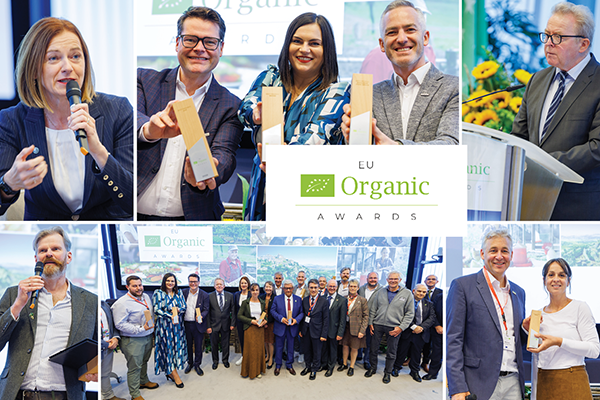
Meet the winners of the 2022 and 2023 editions. Watch the full recording of the second EU organic awards ceremony that took place in Brussels.
The awards ceremony is organised as one of a range of activities and events to mark EU organic day on 23 September. The winners are invited to an event in Brussels to collect their awards. This event involves representatives of the European Commission, the European Parliament, the Council of the European Union, the European Economic and Social Committee, the Committee of the Regions, COPA-COGECA and IFOAM Organics Europe. Providing examples of best practices, the winners have the opportunity to explain their project to a broader public.
About the EU organic awards
Increases in organic production contribute significantly to reducing the use of chemical fertilisers, pesticides and antimicrobials and have positive effects on our climate, the environment, biodiversity and animal welfare. That is why organic production has been identified as playing a key role in achieving the objectives of the European Green Deal, the Farm to Fork strategy and the Biodiversity strategy. For this reason, the Commission has defined a target of 25% of EU agricultural land under organic farming by 2030 and a significant increase in organic aquaculture.
The Commission has adopted the Action Plan for the Development of Organic Production in March 2021, including the launch of annual awards. They aim to reward the best and most innovative organic actors, contributing to the reduction of agriculture’s impact on the environment and climate.
Organisers
The EU organic awards are jointly organised by the European Commission, the European Economic and Social Committee, the European Committee of the Region, COPA-COGECA and IFOAM Organics Europe.
The jury deciding on the final winners comprised representatives of:
- The European Commission,
- The European Economic and Social Committee,
- The European Committee of the Regions,
- COPA-COGECA,
- IFOAM Organics Europe,
- The European Parliament and
- The Council of the European Union.
Organic farming, aquaculture and food in the EU
Regulation (EU) 2018/848 states in recital 1 that “Organic production is an overall system of farm management and food production that combines best environmental and climate action practices, a high level of biodiversity, the preservation of natural resources and the application of high animal welfare standards and high production standards in line with the demand of a growing number of consumers for products produced using natural substances and processes”.
Organic production is increasing in the EU. In 2019, 8.5% of EU agricultural land was under organic farming. This equalled 13.8 million hectares, up from 9.5 million hectares in 2012, a 45.8% increase. The countries accounting for most of the EU agricultural land under organic farming were Spain (2.4 billion hectares, 17.4% of the EU total), France (2.2 billion hectares, 16.2% of the EU total), Italy (2.0 billion hectares, 14.5% of the total) and Germany (1.3 billion hectares, 9.4% of the EU total) as per Eurostat organic farming statistics.
Across the entire value chain, almost 344,000 organic producers and over 78,000 organic processors were active in the EU. Organic farmers benefit from the price premiums that organic products fetch on the market and the rapidly growing final consumer demand for organic products. In 2019, the EU market accounted for 38.8 billion euro in a global market of 106.4 billion euro, second after the US market accounting for 48.2 billion. Large markets in the EU are Germany (12.0 billion) euro and France (11.3 billion euro), as per FIBL statistics.
Per capita consumer expenditure on organic products is highest in Denmark (344 euro, equivalent to 12% of grocery shopping) and Luxembourg (264 euro, equivalent to 8% of grocery shopping), as per FIBL statistics.
Consumer awareness of the EU organic logo is increasing. In 2020, 56% of Eurobarometer survey respondents recognised the logo, compared to 27% in 2017. 80% of survey respondents believe that organic products are more environmentally friendly and respect higher animal welfare standards.
Food for Europe podcast episodes
A selection of the Food for Europe podcast episodes are dedicated to organic farming in the EU, as well as the launch of the EU organic awards in 2022 and the 2023 awards ceremony. All the episodes of the "Food for Europe" podcast are released in English, French and German.
 Celebrating the best of organic farming and food
29 September 2023
 EU Organic Awards
24 March 2022
 EU organic action plan – what's on the plate?
1 April 2021
 Strengthening the EU organic label
18 March 2021
 Building trust in organic farming in Europe
11 March 2021
 Introducing organics
4 March 2021
Documents
- Downloadбългарски
- Downloadespañol
- Downloadčeština
- Downloaddansk
- DownloadDeutsch
- Downloadeesti
- Downloadελληνικά
- Downloadfrançais
- DownloadGaeilge
- Downloadhrvatski
- Downloaditaliano
- Downloadlatviešu
- Downloadlietuvių
- Downloadmagyar
- DownloadMalti
- DownloadNederlands
- Downloadpolski
- Downloadportuguês
- Downloadromână
- Downloadslovenčina
- Downloadslovenščina
- Downloadsuomi
- Downloadsvenska
- Downloadбългарски
- Downloadespañol
- Downloadčeština
- Downloaddansk
- DownloadDeutsch
- Downloadeesti
- Downloadελληνικά
- Downloadfrançais
- DownloadGaeilge
- Downloadhrvatski
- Downloaditaliano
- Downloadlatviešu
- Downloadlietuvių
- Downloadmagyar
- DownloadMalti
- DownloadNederlands
- Downloadpolski
- Downloadportuguês
- Downloadromână
- Downloadslovenčina
- Downloadslovenščina
- Downloadsuomi
- Downloadsvenska
